The 30-year drag
$100,000 at 6% gross.
By Leo HongReviewed 1 min read
Takeaway: a fee gap of 1–2 points compounds to six figures. Control fees before chasing returns.
Assume $100,000 invested once, a 6.00% yearly return before fees, fees taken yearly, no additions, and no taxes (illustration only). Real life has contributions, inflation, and taxes, but the math points the same way.
| Annual fee | Net return | Value after 30 years | Lost to fees vs 0-fee |
|---|---|---|---|
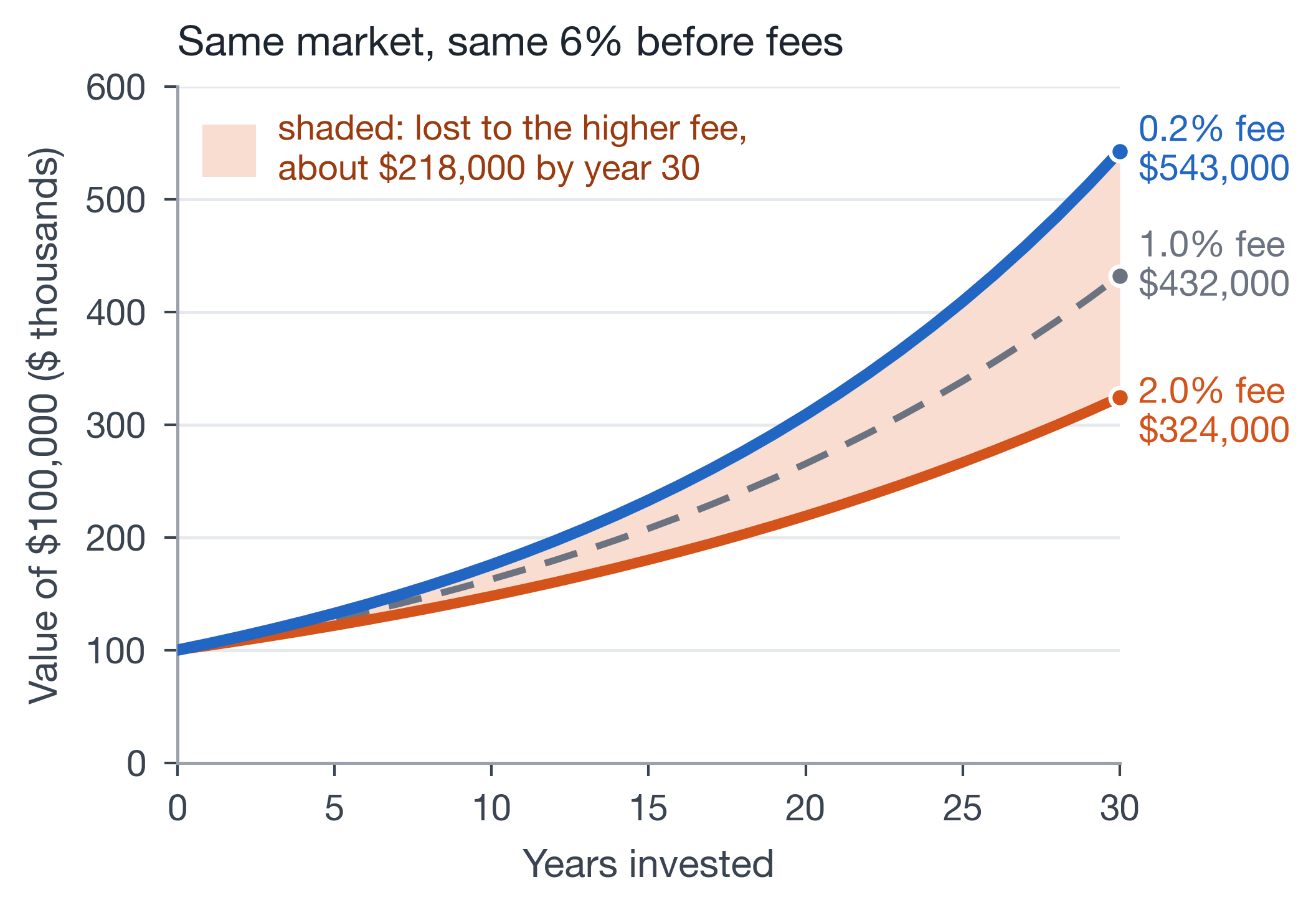
| 0.20% | 5.80% | ~$543,000 | ~$32,000 |
| 1.00% | 5.00% | ~$432,000 | ~$142,000 |
| 2.00% | 4.00% | ~$324,000 | ~$250,000 |
Check: 1.058³⁰ ≈ 5.43, so ~$543,000, and 1.04³⁰ ≈ 3.24, so ~$324,000. The 1.8-point gap (0.2% vs 2.0%) costs ~$218,000, more than double the starting capital.
Two lessons:
- Small % × long time = huge dollars. 2% sounds small. Over a working lifetime it is a house.
- Fees are the most controllable return. You cannot control markets. You can control MER, turnover, and advisor cost.
If you contribute monthly, the effect is larger in dollars, because more money pays the fee. If returns are lower (say 4% before fees in a balanced portfolio), fees eat a larger share. At 4% with a 2% fee, you keep only half of each year’s return, and after 30 years just over a third of the growth.